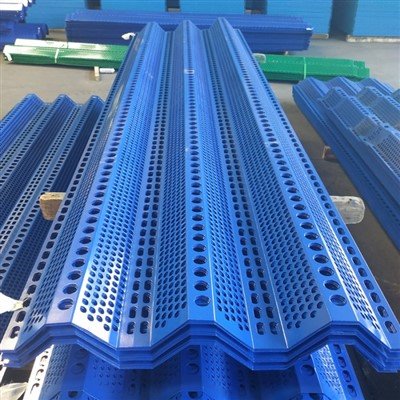
In industrial production environments, workshop fencing plays a crucial role in safety and protection, not only demarcating areas and standardizing processes but also enhancing the overall visual appeal. As a developed industrial region, Beijing has even more stringent requirements for the manufacturing processes of workshop fencing. Below is a detailed introduction to its common technological characteristics.
Material Selection: Primarily High-Quality Steel
Workshop fencing typically uses low-carbon steel wire, galvanized iron wire, and other materials. Some high-end projects may use stainless steel. These materials are characterized by high strength and corrosion resistance, making them suitable for the humid and dusty environments of workshops. For example, galvanized wire mesh not only prevents rust but also extends its service life.
Welding Process: Advanced Technology Guarantees Safety
Welding is a key process in fencing formation, commonly employing techniques such as resistance welding and spot welding. Manufacturers in Beijing have relatively mature welding processes, producing strong and uniform welds that ensure the overall stability of the fencing. Some manufacturers also use a process of welding before galvanizing to prevent rust at the welded areas.
Surface Treatment: Diverse Methods Enhance Protection
The surface treatment of the fencing directly affects its appearance and durability. Common processing methods include:
Dip PVC coating: Applying plastic powder to the wire surface, resulting in rich colors that are resistant to fading and a smooth feel.
Powder coating: Forming a coating through electrostatic spraying, offering strong adhesion and suitable for outdoor use.
Zinc plating: Primarily used for the wire base to prevent rust and extend service life.
Installation process: Details determine quality
During installation, the ground foundation and post fixation are crucial. Installation teams in Beijing typically choose between concrete pouring or pre-embedded parts to fix the posts, ensuring the fence's stability, depending on the ground conditions. Furthermore, the connection method between the mesh and the posts is also important; common methods include clip-on and screw fixing, which facilitate both installation and quick disassembly.
Design style: Balancing practicality and aesthetics
Modern workshop fences not only emphasize practicality but also aesthetics. Common designs include:
Framed fence: Simple structure, suitable for large workshops.
Double-wire fence: Lightweight appearance, suitable for areas with high visual requirements.
Bent fence: Edges are bent to avoid sharp corners and improve safety.