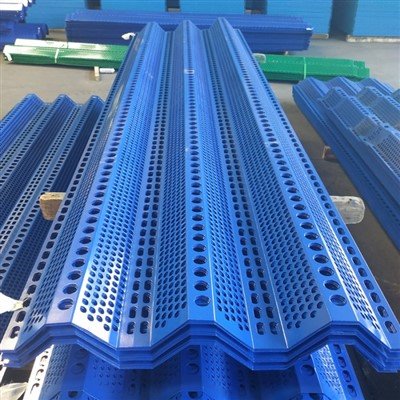
As a professional protective facility, sports field fencing's core function is to ensure field safety through physical barriers and buffering design. A typical structure uses a low-carbon steel wire woven mesh combined with a post support system, forming a reliable barrier while maintaining visibility.
The fencing's protective capability primarily depends on material strength and structural stability. After cold drawing, the low-carbon steel wire achieves a tensile strength of 300-500 MPa, and the mesh structure formed by the 38mm wire diameter effectively disperses impact force. Electrostatic powder coating not only improves weather resistance, but its 60-80μm coating thickness also avoids the risk of scratches from metal burrs. The 50mm mesh design balances protective performance with visibility requirements, meeting international sports field facility standards.
When selecting fencing systems, the industry typically focuses on three technical dimensions: first, the post connection method, with embedded parts and flanges catering to permanent sites and removable requirements, respectively; second, dynamic load capacity, with high-quality fences capable of withstanding impact energy exceeding 500J; and finally, environmental adaptability, with hot-dip galvanizing replacing electrostatic spraying in coastal areas to combat salt spray corrosion.
In practical applications, school playgrounds and similar locations prioritize anti-climbing designs, often adding a 30° inward angle to the top of the mesh; while professional sports fields emphasize impact resistance, employing double-twisted weaving techniques to enhance structural toughness. These differences reflect the need for fencing design to balance multiple factors, including safety standards, usage scenarios, and cost-effectiveness.