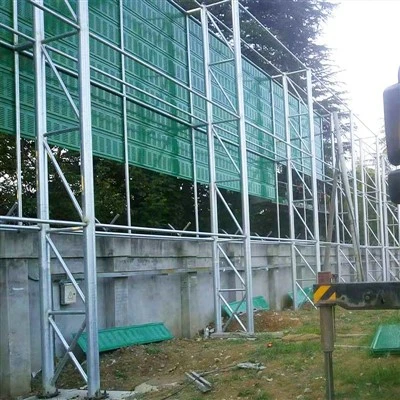
Environmental Benefits
Due to the lack of any windbreak and dust suppression measures, the coal yard is considered an unorganized emission source by environmental protection departments. According to relevant Chinese environmental regulations, dust pollution exceeding standards will incur emission fees. Furthermore, dust pollution from the coal yard will negatively impact the lives, studies, work, and production of surrounding residents. The construction of windbreak and dust suppression walls will significantly reduce dust pollution, beautify the surrounding landscape, and meet the requirements of environmental protection departments. It can transform a previously heavily polluted stockpile into a beautiful and environmentally friendly green stockpile, thereby achieving the goal of dust pollution control.
Economic Benefits
The dust generation coefficient during the loading and unloading process of open-air coal storage is 3.53-6.41 kg/t coal/year (based on the "Technical Guidelines for the Verification of Pollutant Emissions in Some Industries"). Assuming an annual raw coal consumption of 500,000 tons, and using the maximum value of the generation coefficient in the calculation, the use of windbreak and dust suppression walls, with an 80% dust reduction rate, can save 2,564 tons of coal annually. If coal dust losses from strong winds are included, the overall reduction in coal loss will reach approximately 1%, saving about 5,000 tons of coal annually.
With the rapid development of my country's economy, the volume of bulk materials such as coal, mineral powder, and sand ash being transported and stored is constantly increasing, and the resulting dust is attracting increasing attention. As national energy conservation and environmental protection laws and regulations become more stringent, dust pollution and energy consumption at coal yards have become key management priorities for local governments. Implementing a complete enclosure project for coal yards is not only extremely costly, but also difficult to promote due to limitations in roof span and bucket wheel excavator operation requirements, as well as factors such as ventilation, heat insulation, dust prevention, lighting, limited space, and inconvenient vehicle access. In contrast, windbreak and dust suppression wall and netting technologies, widely used abroad, are increasingly welcomed by enterprises due to their low investment and good dust suppression effect.